

Protection Requirements Assessment
The Protection Requirements Assessment (PRA) is a central component of the IT security concept according to IT-Grundschutz and ISO/IEC 27001. It answers the fundamental question: How much protection do our information, applications, and IT systems need?
Through systematic analysis, it is determined which assets are critical for the company and which security measures are appropriate. This creates the foundation for an efficient and effective Information Security Management System (ISMS).
Navigation: ISMS → Inventory
The protection requirements assessment requires a completed structural analysis, which in turn requires a defined scope.
Why is the Protection Requirements Assessment relevant?
Section titled “Why is the Protection Requirements Assessment relevant?”- Resource optimization: Security measures are deployed specifically where they are most needed
- Transparency: Traceable justification for security investments
- Compliance: Meeting regulatory requirements (BSI IT-Grundschutz, ISO 27001)
- Risk minimization: Identifies and assesses protection requirements systematically
- Prioritization: Clear decision basis for implementing protective measures
The Three Protection Goals in Detail
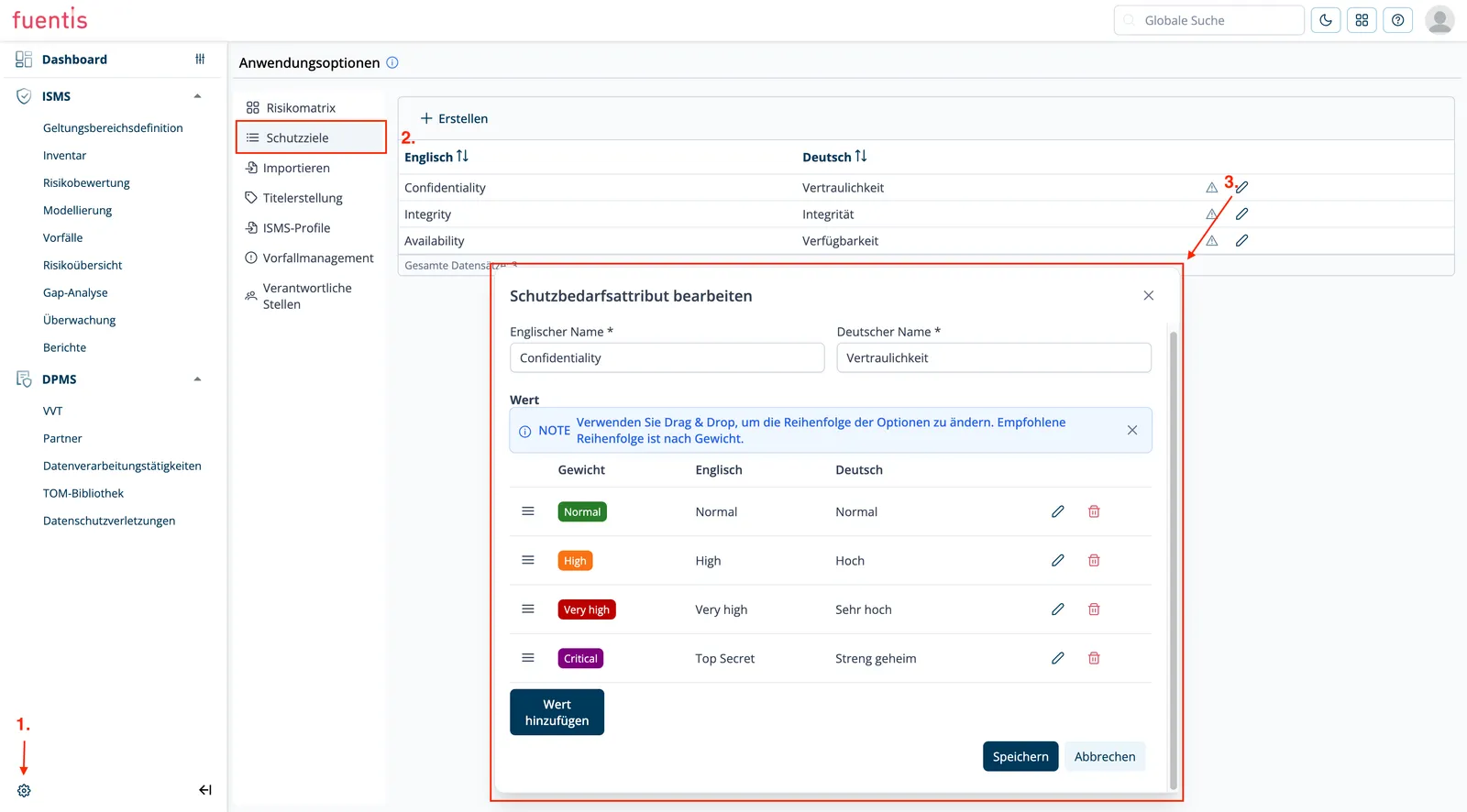
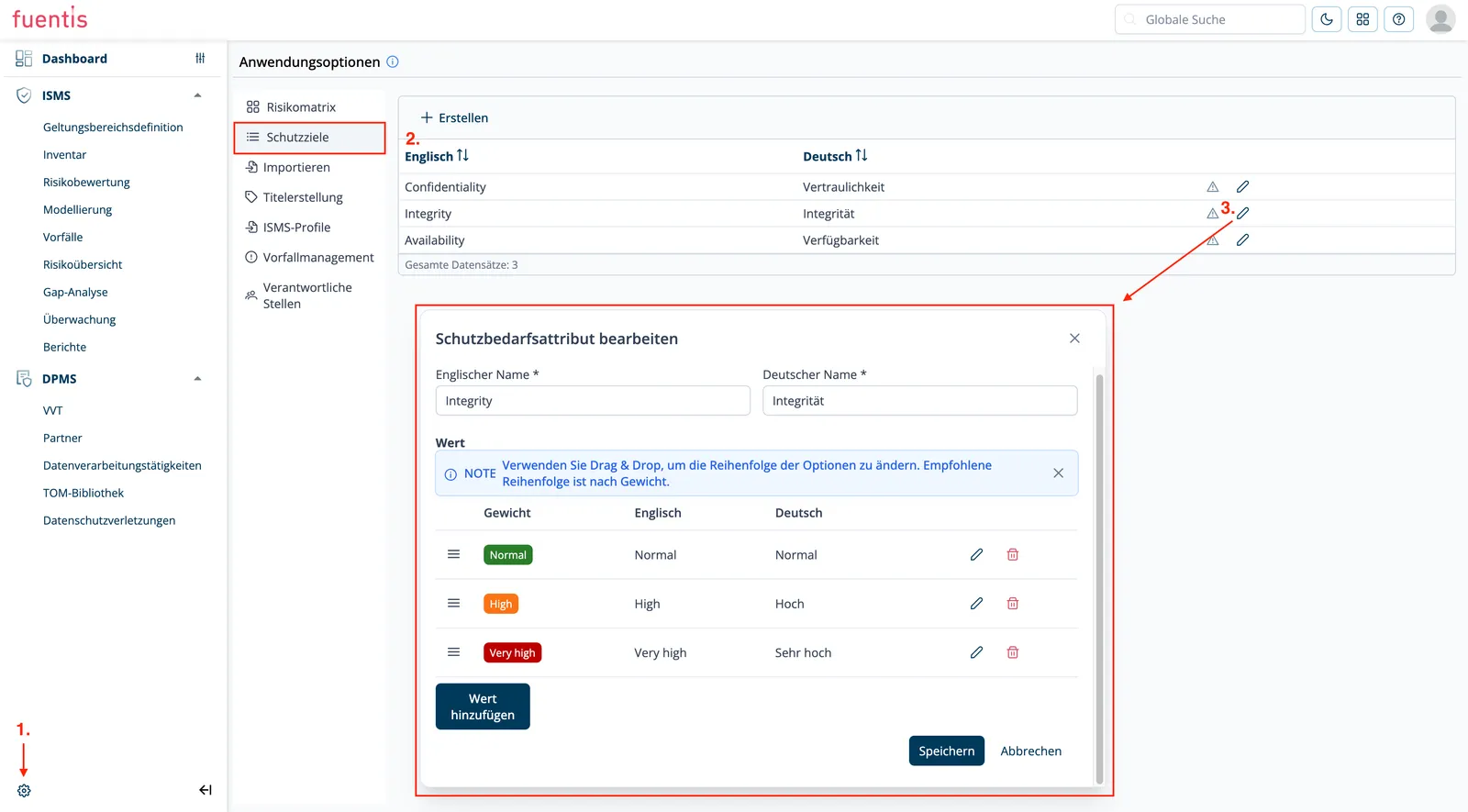
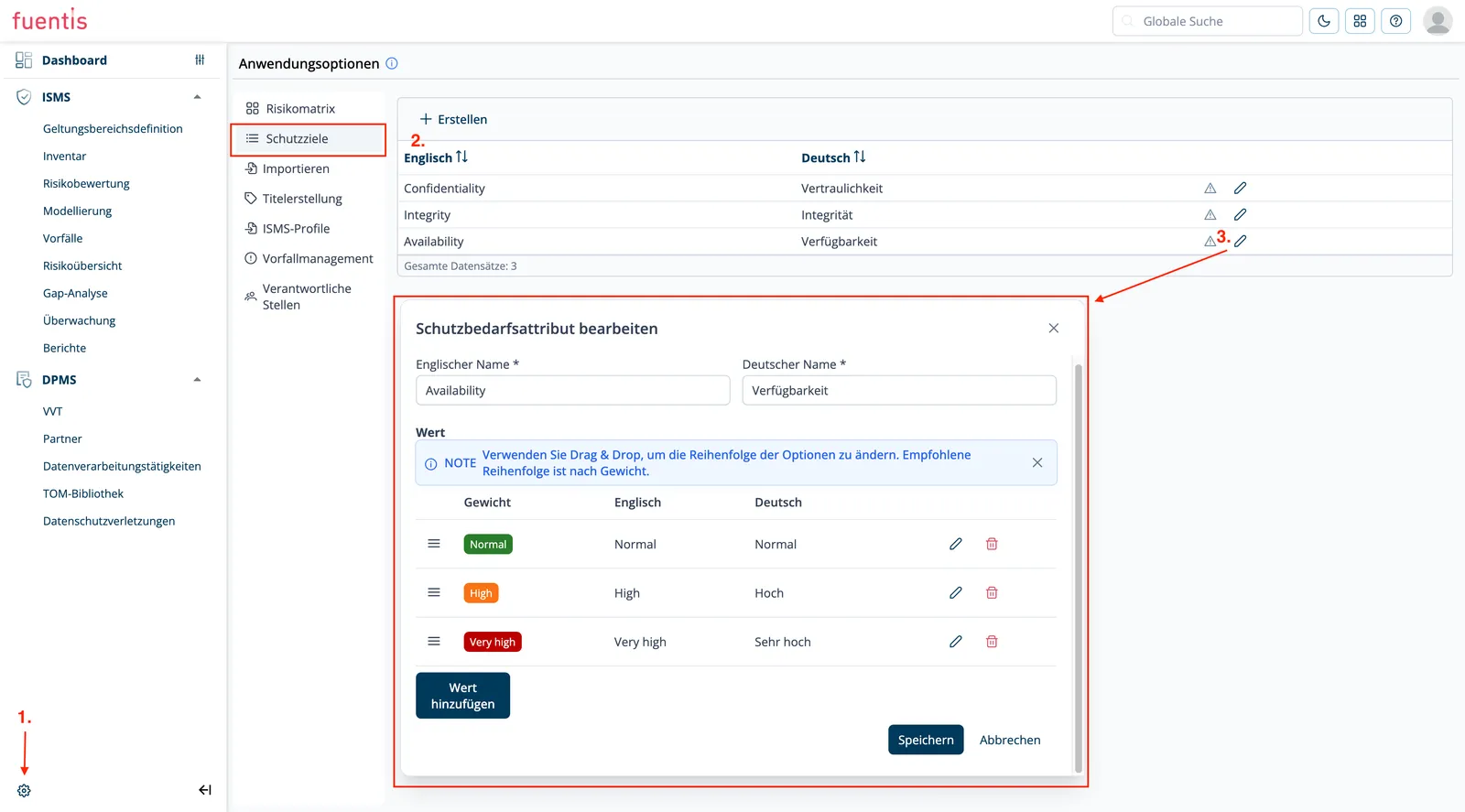
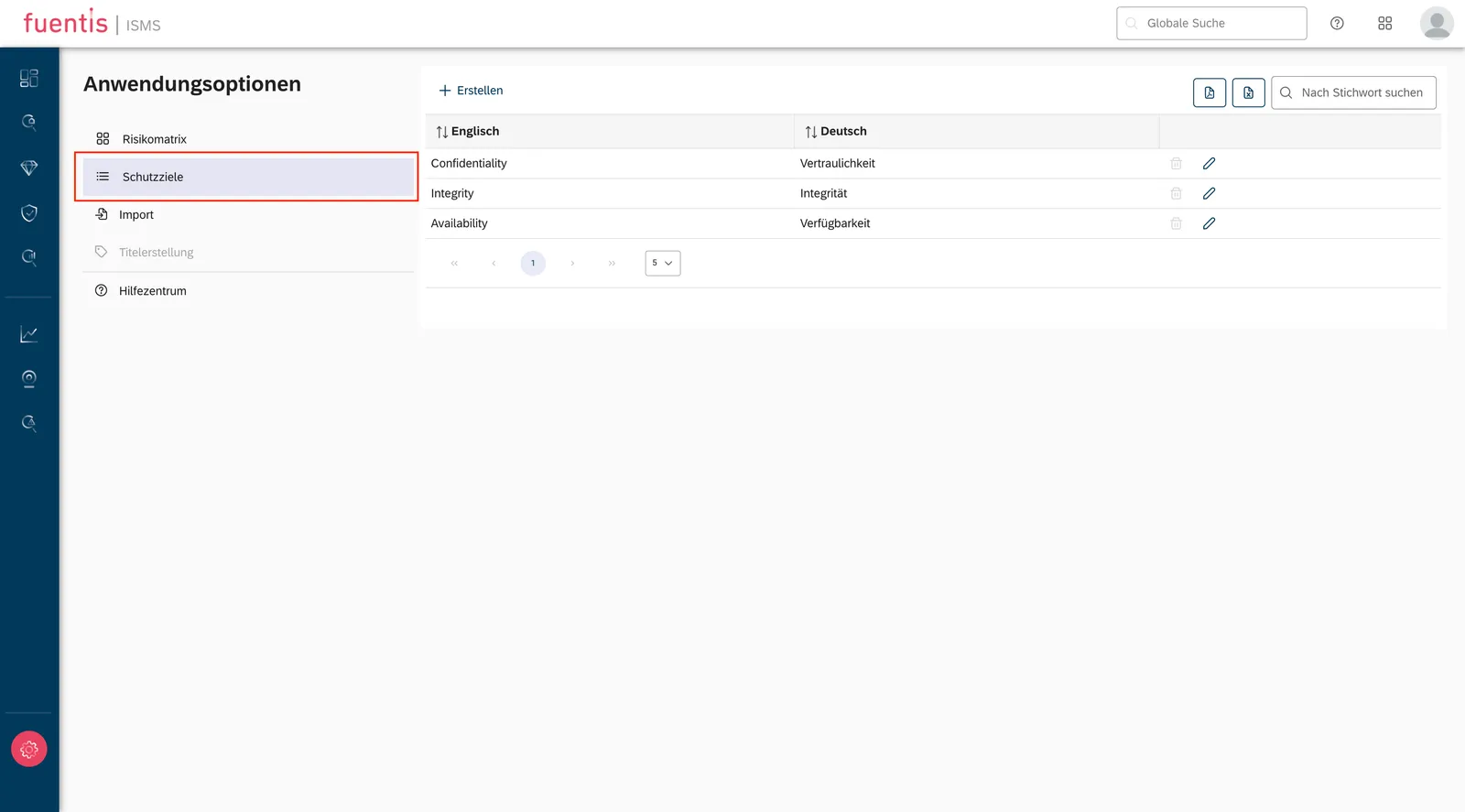
Section titled “The Three Protection Goals in Detail”Note: You can adjust the protection goals and values in the settings.
The protection requirements assessment is based on the three fundamental protection goals of information security:
1. Confidentiality
Section titled “1. Confidentiality”Definition: Information can only be viewed by authorized persons.
Practical meaning:
- Protection against unauthorized access to sensitive data
- Preservation of trade secrets
- Compliance with data protection regulations
- Prevention of industrial espionage
2. Integrity
Section titled “2. Integrity”Definition: Information can only be modified by authorized persons. All changes are authentic and traceable.
Practical meaning:
- Protection against unauthorized manipulation
- Ensuring data accuracy
- Traceability of changes
- Prevention of data corruption
3. Availability
Section titled “3. Availability”Definition: Information and systems are available at the right time and place.
Practical meaning:
- Ensuring business continuity
- Minimizing downtime
- Guaranteeing critical processes
- Compliance with Service Level Agreements (SLAs)
Protection Requirement Categories
Section titled “Protection Requirement Categories”Protection requirements are divided into three categories based on potential damage impacts:
Normal
Section titled “Normal”Criteria:
- Damage impacts are limited and manageable
- Financial losses remain tolerable
- Maximum downtime: 24-72 hours
- Minor or only internal reputation damage
Typical examples:
- Internal documentation
- Non-critical administrative processes
- Publicly accessible information
Criteria:
- Damage impacts can be considerable
- Significant financial losses, but not existentially threatening
- Maximum downtime: 1-24 hours
- Broad reputation or trust impairment possible
Typical examples:
- Personal data
- Important business processes
- Critical customer information
Very High
Section titled “Very High”Criteria:
- Existentially threatening, catastrophic impacts possible
- Fundamental violations of laws and regulations
- Maximum downtime: < 1 hour
- Danger to life and limb possible
Typical examples:
- Critical infrastructure systems
- Highly sensitive research data
- Systems with potential for personal endangerment
Damage Scenarios in Practice
Section titled “Damage Scenarios in Practice”During protection requirements assessment, various damage scenarios are systematically considered:
Note: You can store this information in the respective scope.
1. Violation of Laws/Regulations/Contracts
Section titled “1. Violation of Laws/Regulations/Contracts”- Normal: Minor contract violations, minimal penalties
- High: Significant legal consequences, high fines
- Very High: Fundamental law violations, ruinous liability damages
2. Impairment of Informational Self-Determination
Section titled “2. Impairment of Informational Self-Determination”- Normal: Possible impairment of social standing
- High: Significant impairment of economic circumstances
- Very High: Danger to personal freedom of the affected person
3. Impairment of Task Fulfillment
Section titled “3. Impairment of Task Fulfillment”- Normal: Classified as tolerable by those affected
- High: Classified as intolerable by individuals
- Very High: Classified as intolerable by all
4. Financial Impacts
Section titled “4. Financial Impacts”- Normal: Tolerable financial damage
- High: Considerable but not existentially threatening losses
- Very High: Existentially threatening financial damage
Implementation of Protection Requirements Assessment
Section titled “Implementation of Protection Requirements Assessment”Phase 1: Preparation
Section titled “Phase 1: Preparation”- Definition of Protection Requirement Categories
- Adaptation to organization-specific requirements
- Establishment of concrete threshold values
- Coordination with management
- Identification of Damage Scenarios
- Consider industry-specific risks
- Include regulatory requirements
- Analyze historical incidents
Phase 2: Implementation
Section titled “Phase 2: Implementation”Protection Requirements Assessment for Business Processes
Section titled “Protection Requirements Assessment for Business Processes”Procedure:
- Identify all relevant business processes
- Assess confidentiality, integrity, and availability for each process
- Involve department management in the assessment
- Document justification
Practice Tip: Use standardized questionnaires for uniform assessment. This accelerates the process and ensures comparability.
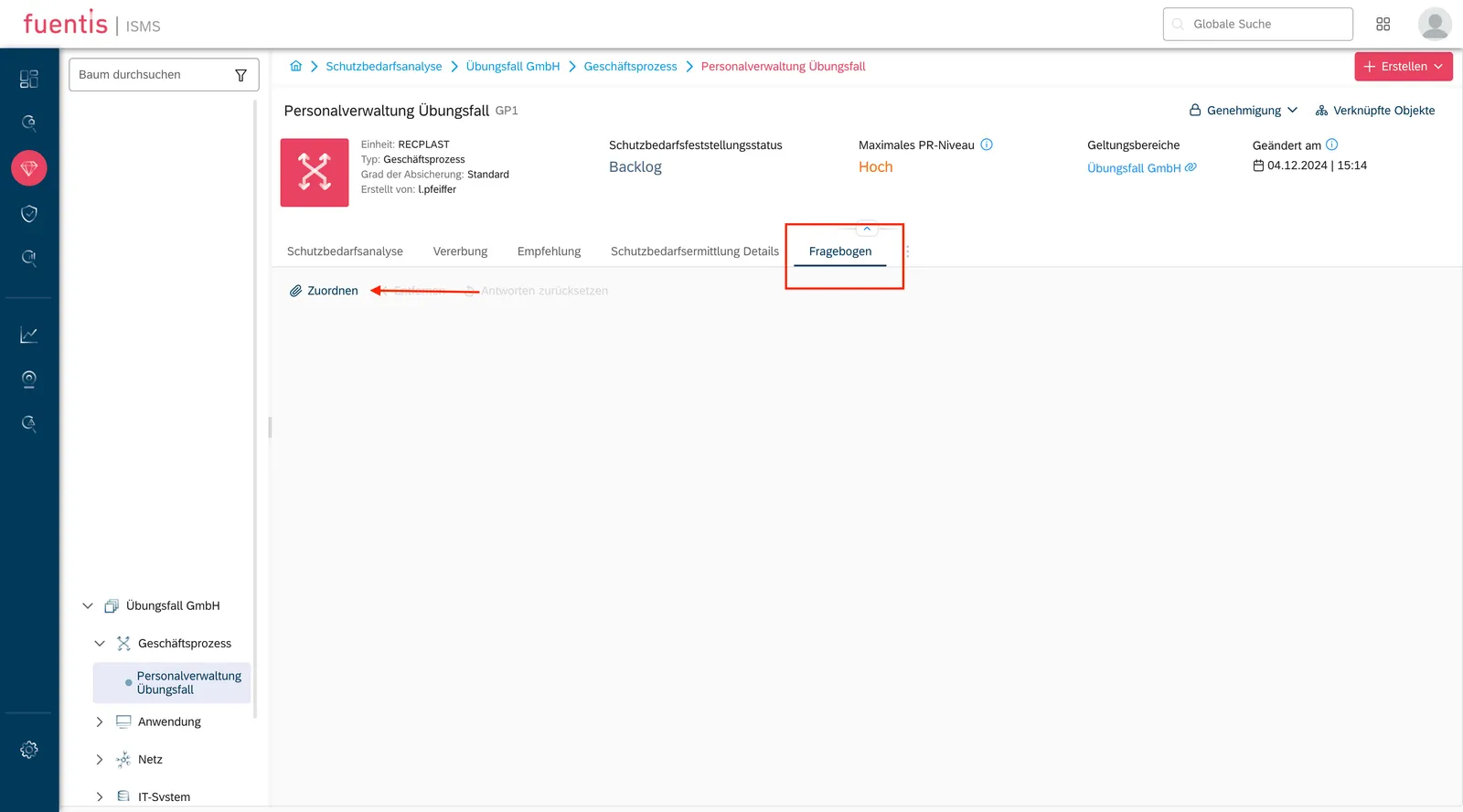
Protection Requirements Assessment for Applications
Section titled “Protection Requirements Assessment for Applications”Inheritance Principles:
- Maximum principle: The highest protection requirement of all supported business processes is adopted
- Cumulation effect: Multiple processes with normal protection requirements can together result in high protection requirements
Important: The cumulative effect only kicks in once at least 3 superordinate target object groups are linked to the target object group.
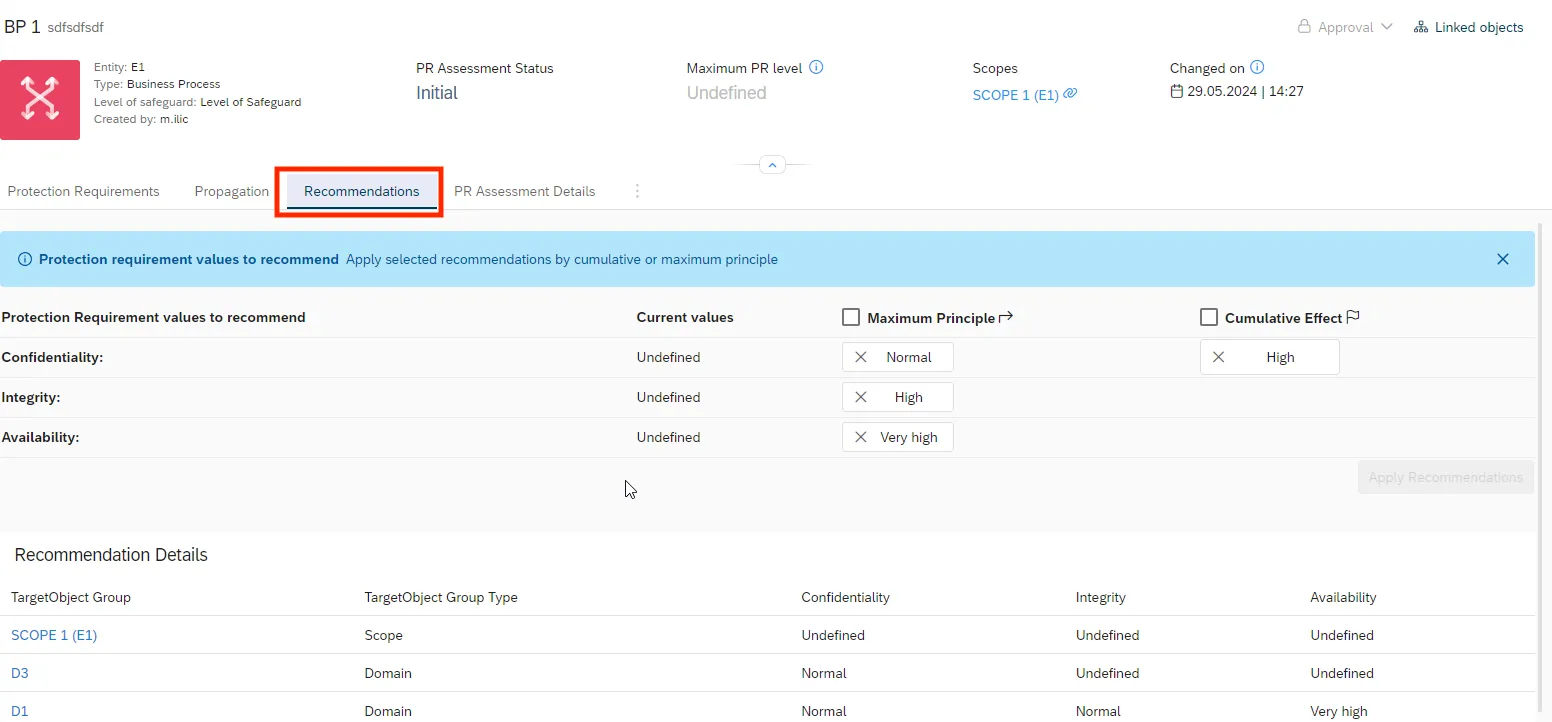
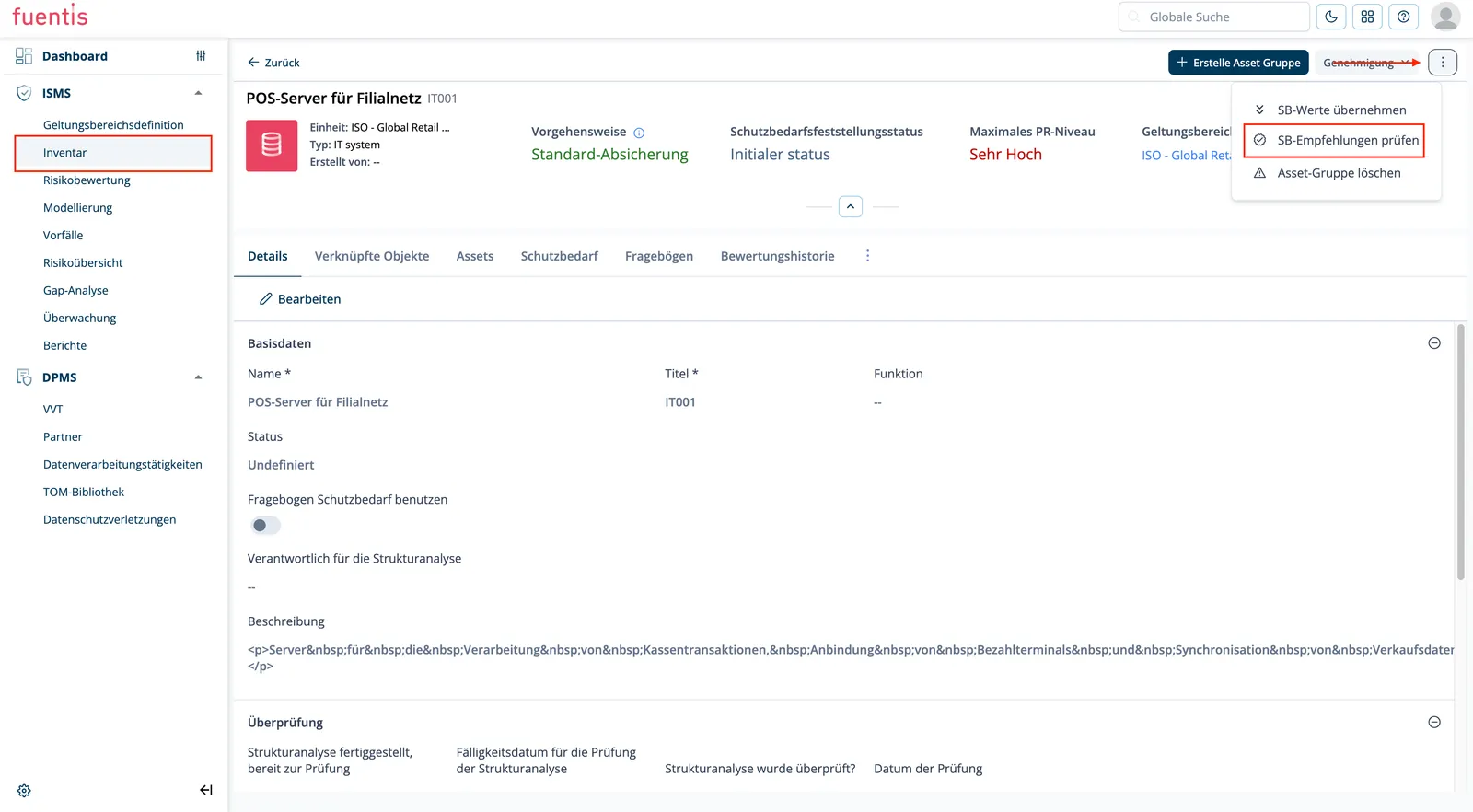
Example: A CRM application supports multiple sales processes. Individually, these have normal protection requirements, but a complete failure would mean significant revenue losses → Availability: high
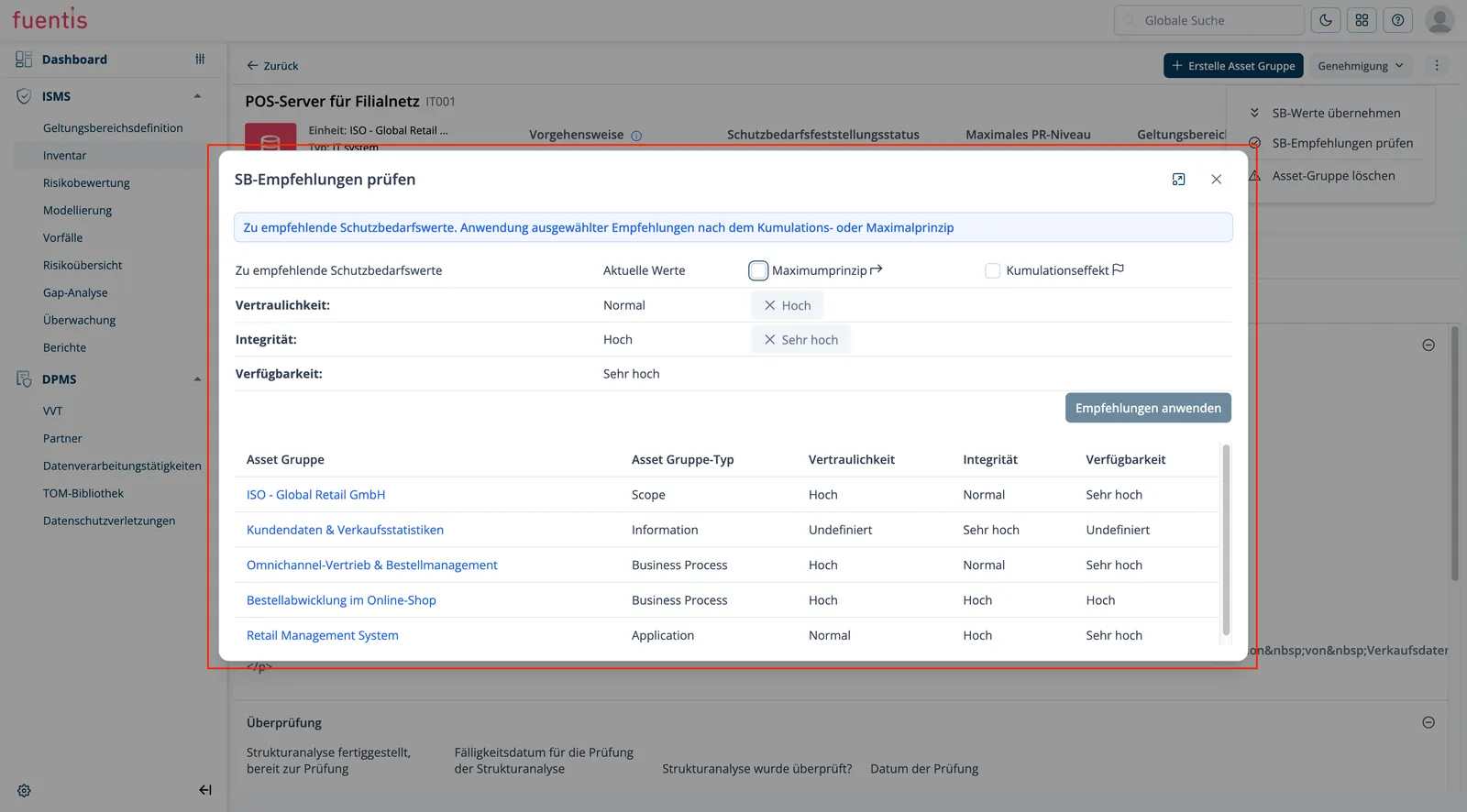
Protection Requirements Assessment for IT Systems
Section titled “Protection Requirements Assessment for IT Systems”Special considerations:
- Protection requirements inherit from applications running on them
- Shared resources require special consideration
- Virtualization can lead to cumulation effects
Protection Requirements Assessment for Communication Connections
Section titled “Protection Requirements Assessment for Communication Connections”Identify critical connections:
- Internet connections
- Connections over public networks
- Transmission of sensitive data
- Single points of failure
Protection Requirements Assessment for Premises
Section titled “Protection Requirements Assessment for Premises”To be considered:
- Physical access protection
- Environmental conditions (climate, fire protection)
- Concentration of critical systems
- Redundancies and alternative locations
Integration into the fuentis Suite
Section titled “Integration into the fuentis Suite”Functionalities in the ISMS Module
Section titled “Functionalities in the ISMS Module”The fuentis Suite supports protection requirements assessment through:
1. Structured Recording
Section titled “1. Structured Recording”- Protection Requirements Tab: Central recording of all protection requirements
- Dropdown menus for standardized categories
- Free text fields for detailed justifications
- Custom PR Values: Extension with organization-specific protection goals
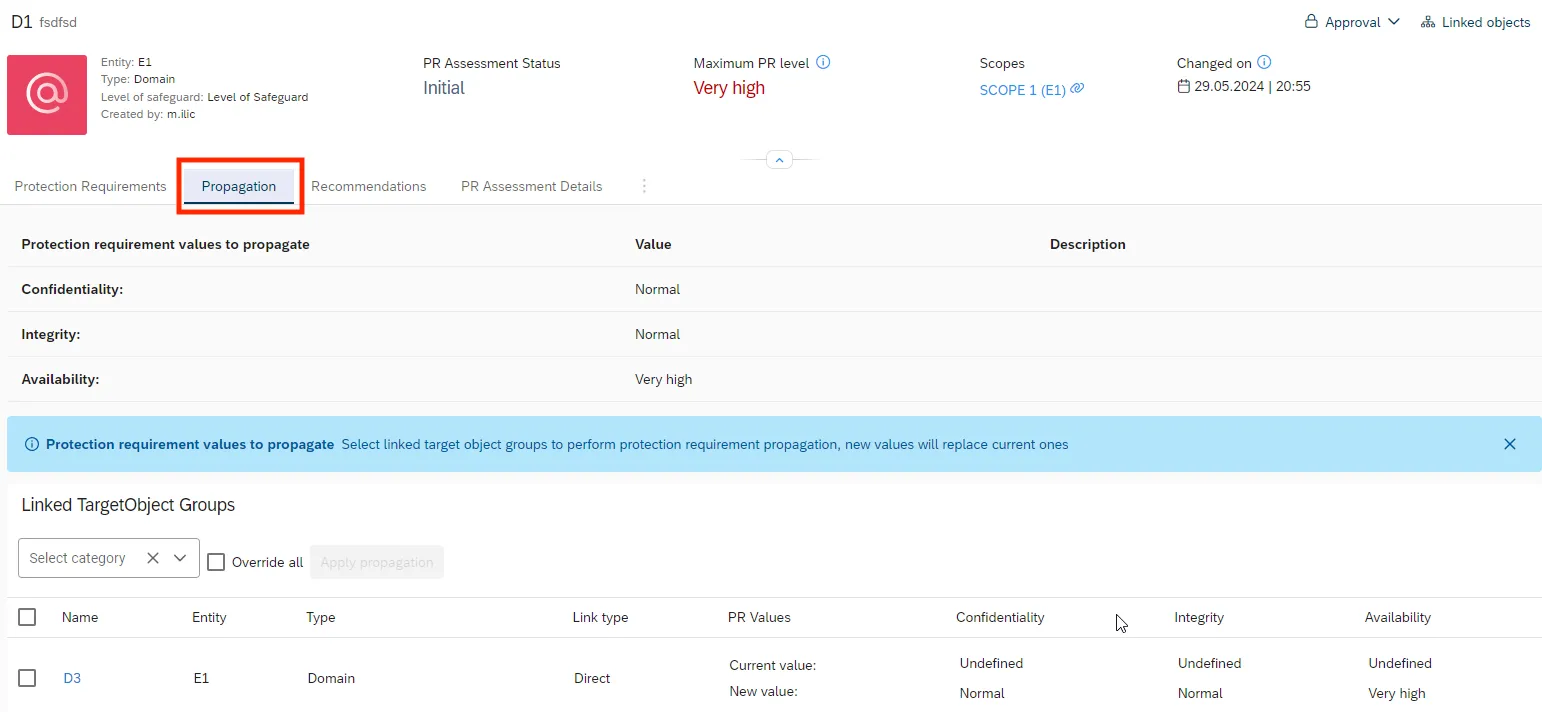
2. Automated Inheritance (Propagation)
Section titled “2. Automated Inheritance (Propagation)”- Propagation Tab: Automatic transfer of protection requirements
- Override functions for manual adjustments
- Visualization of inheritance chains
- Bulk operations for efficient processing
3. Intelligent Recommendations
Section titled “3. Intelligent Recommendations”- Algorithm-based analysis of linked assets
- Maximum principle and cumulation effect are automatically considered
- Preview function shows effects before adoption
- Multi-select options for flexible selection
4. Workflow Integration (Four-Eyes Principle)
Section titled “4. Workflow Integration (Four-Eyes Principle)”- Submit → Review → Approve/Reject → Reopen
- Status tracking: Initial, Submitted, Approved, Rejected, Reopened
- Audit trail: Complete documentation of all changes
- Custom workflows: Adaptation to organization-specific approval processes
5. Questionnaire Module
Section titled “5. Questionnaire Module”- Standardized questionnaires for uniform assessment
- Template library with best practices
- Automatic evaluation and categorization
- Export functions for reports and audits
Authorization Concept
Section titled “Authorization Concept”Global Roles:
ISMS_PROTECTION_REQUIREMENT_ACCESS: Basic access to PRA functions
Granular Permissions:
Scopes - PRA Read: Read access to scope protection requirementsScopes - Edit Protection Requirements: Editing of scope protection requirementsTargetObject Groups - PRA Read: Read access to TOG protection requirementsTargetObject Groups - Edit Protection Requirements: Editing of TOG protection requirementsPropagation of Protection Requirements: Execution of inheritanceTargetObject Groups - Recommendation: Use of recommendation function
Best Practices for Implementation
Section titled “Best Practices for Implementation”1. Preparation and Planning
Section titled “1. Preparation and Planning”✓ Secure management commitment
- Involve senior management early
- Clarify budget and resources
- Communicate commitment
✓ Assemble project team
- Include department representatives
- Ensure IT security expertise
- Define clear responsibilities
2. Implementation
Section titled “2. Implementation”✓ Follow top-down approach
- Start with critical business processes
- Gradually advance to technical assets
- Identify and implement quick wins
✓ Strive for standardization
- Use uniform assessment criteria
- Utilize questionnaires and templates
- Conduct regular calibration meetings
✓ Ensure documentation
- Justify all decisions
- Make assumptions explicit
- Document changes traceably
3. Quality Assurance
Section titled “3. Quality Assurance”✓ Consistently apply four-eyes principle
- Conduct independent reviews
- Build in plausibility checks
- Plan regular audits
✓ Continuous improvement
- Document lessons learned
- Regularly optimize processes
- Establish feedback loops
4. Avoid Common Pitfalls
Section titled “4. Avoid Common Pitfalls”Avoid overestimation
- Not everything is “very high” critical
- Make realistic assessments
- Consider cost-benefit ratio
Prevent underestimation
- Don’t underestimate cumulation effects
- Fully capture dependencies
- Think through worst-case scenarios
Control scope creep
- Define clear system boundaries
- Maintain prioritization
- Choose iterative approach
Connection with Other ISMS Processes
Section titled “Connection with Other ISMS Processes”Risk Analysis
Section titled “Risk Analysis”Protection requirements assessment forms the basis for:
- Identification of relevant threats
- Assessment of probability of occurrence
- Prioritization of risk scenarios
Measure Selection
Section titled “Measure Selection”Based on protection requirements:
- Appropriate security measures are selected
- Implementation priorities are established
- Resources are optimally allocated
Business Continuity Management
Section titled “Business Continuity Management”Protection requirements flow into:
- Definition of Recovery Time Objectives (RTO)
- Establishment of Recovery Point Objectives (RPO)
- Prioritization in recovery
Compliance Management
Section titled “Compliance Management”Documentation supports:
- Evidence for auditors
- Meeting regulatory requirements
- Transparency to stakeholders
Glossary
Section titled “Glossary”Asset: Value or resource of an organization (information, system, process)
Cumulation Effect: Increase in protection requirements through concentration of multiple assets
Maximum Principle: Adoption of the highest protection requirement during inheritance
Propagation: Automatic inheritance of protection requirements between linked assets
TOG (Target Object Group): Logical grouping of assets
4EP (Four-Eye Principle): Four-eyes principle for quality assurance